
Genesis logo

Automate data onboarding. Deliver trusted data.

Turn incoming vendor feeds into governed, analysis-ready datasets. Genesis maps schemas, resolves identifiers, and validates each load so your teams can use the data sooner.
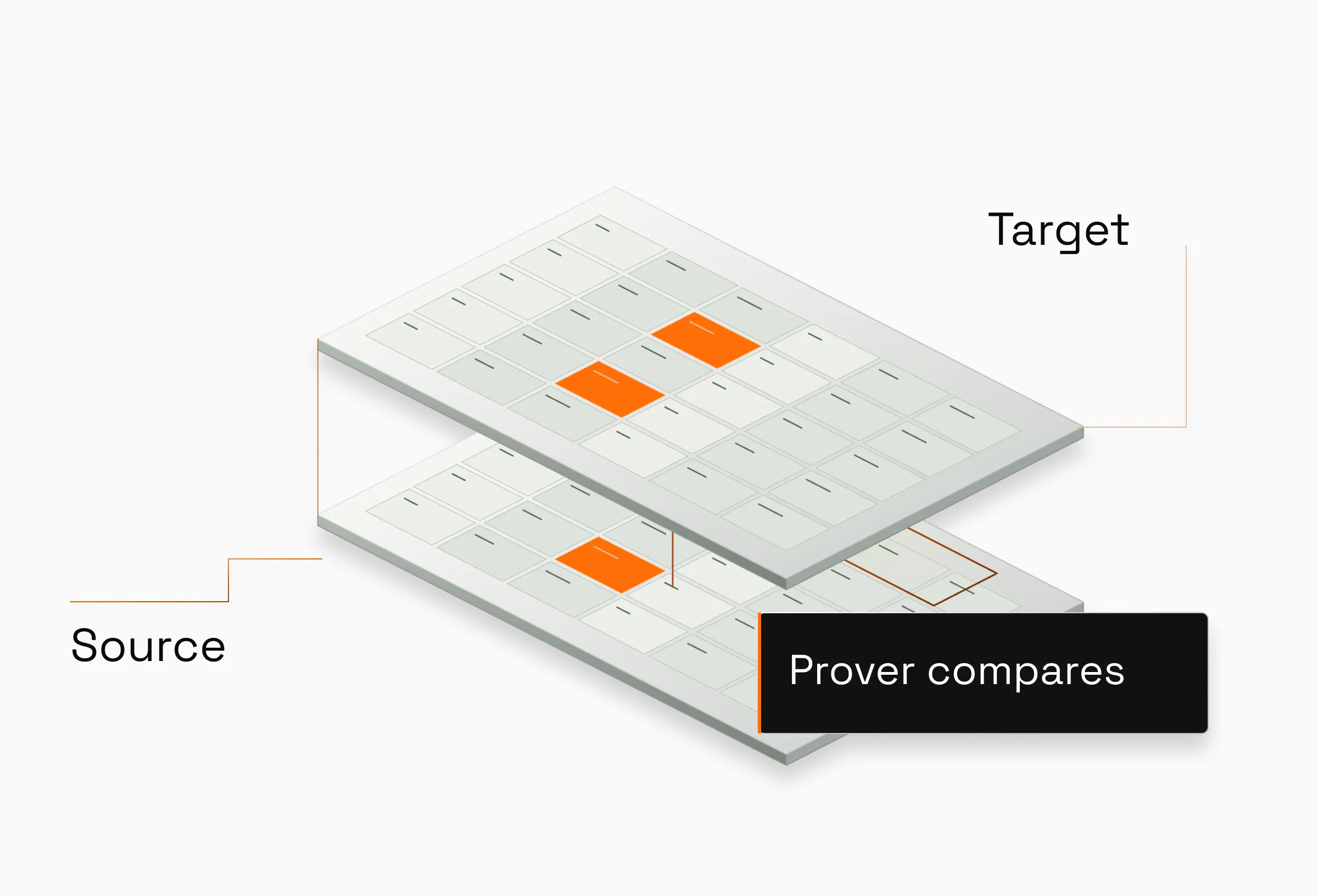
Prover compares source and target data, highlights differences, and provides evidence for review.

DATA ONBOARDING AUTOMATION

Turn incoming feeds into data your teams can use.

Genesis maps, validates, and connects vendor data into governed datasets for portfolio, care, payments, and research teams. Explore four workflows that turn separate feeds into a shared business view.

ASSET MANAGEMENT

Vendor feeds to a governed portfolio

Problem

Holdings, security identifiers, market prices, and ESG scores arrive as separate CSV feeds. Manual reconciliation delays portfolio, risk, and ESG decisions and makes every new file another operational dependency.

Solution

Genesis maps the vendor fields, validates and audits each load, then deduplicates, joins, and enriches the data through Bronze, Silver, and Gold. Teams receive a governed portfolio dataset in Unity Catalog, with ESG-aware metrics ready for business analysis.

Four vendor CSV feeds converge on Genesis. Bronze validates and audits, Silver joins and resolves identifiers, and Gold aggregates positions and ESG metrics. The output is a governed Databricks table and illustrative portfolio dashboard.
Many incoming feeds become one governed portfolio dataset, ready for portfolio, risk, and ESG analysis. The dashboard is shown schematically.
Enlarge diagram

Results

4vendor feeds unified
48governed positions
39columns in the Gold table

HEALTH PLANS

Payer feeds to a unified Member 360

Problem

Enrollment, medical claims, pharmacy claims, eligibility, and provider files arrive on different schedules with inconsistent identifiers. Teams must reconcile who received care, whether coverage was active, and which provider delivered it.

Solution

Genesis resolves member identifiers, matches each claim to coverage active on the date of service, and links the provider and network. Sensitive member fields are masked, with audited access and source lineage supporting one governed view for care, risk, and network teams.

Five payer feeds converge on Genesis. Subscriber and cardholder identifiers resolve to one member key. Each claim links to its active eligibility span and provider, with PHI masking, audited access, and source lineage in a governed Member 360.
A shared member key connects claims to the right coverage period and provider. Representative workflow.
Enlarge diagram

Results

5payer feeds unified
1governed Member 360
Linkedcoverage and provider context

BANKING AND PAYMENTS

Payment rails to screened transactions

Problem

SWIFT messages, ACH batches, card settlement files, and internal wire journals use incompatible formats. Teams reconcile them separately, making it harder to screen parties consistently and trace each payment to its originating rail.

Solution

Genesis converts each format into one shared transaction schema, screens party names and identifiers against reference watchlists, and reconciles journal records. Each payment retains its source rail, screening flags, and evidence for compliance and treasury review.

SWIFT and ISO messages, ACH files, card settlement tables, and wire journals converge into one canonical schema. A sanctions and PEP reference supports party screening, while journal reconciliation preserves rail origin, hit flags, and audit evidence.
Different payment formats converge on one schema, with screening findings and origin preserved for review. Representative workflow.
Enlarge diagram

Results

4payment rails normalized
1canonical transaction table
Taggedrail and screening status

LIFE SCIENCES

Clinical data to a study-ready cohort

Problem

EHR extracts, lab observations, pharmacy claims, and mortality records use different identifiers, code sets, and units. Research teams spend time rebuilding linkage and timelines before they can analyze outcomes.

Solution

Genesis standardizes clinical codes and units, links records with study-specific patient keys, and builds patient histories over time. De-identified linkage and retained source lineage support reproducible cohort snapshots for outcomes research, regulatory, and safety analysis.

EHR, laboratory, pharmacy, and mortality data converge through terminology and unit normalization. A patient-master reference links study-scoped identifiers to an index date and follow-up events, producing a versioned study cohort with retained lineage.
Clinical events align to an index date and follow-up window in a versioned study cohort. Representative workflow.
Enlarge diagram

Results

4clinical sources unified
1longitudinal cohort
Versionedreproducible study snapshots

Workflow diagram

Frequently Asked Questions